Greater Houston just posted its deepest single-family inventory in years, with more than 36,000 active listings and a clear shift toward buyer-friendly conditions. Inside the Heights, the tape reads like a different city. Inventory is down from last year, the median sale price hit $775,500 in April, and homes are selling in an average of about 10 days. That gap is not a rounding error. It is the argument.
The thesis worth carrying into a Heights offer this summer: the neighborhood's decoupling is structural, not seasonal, and the pipeline of new inner-loop luxury supply will not relieve it inside the next two selling cycles. Buyers waiting for the broader Houston softening to reach 11th Street are waiting on the wrong map.
The number that doesn't fit
The clearest way to see the divergence is side by side.
| Metric (spring 2026) | Greater Houston | Houston Heights |
|---|---|---|
| Active single-family inventory | 36,000+ listings, multi-year high | Down year over year |
| Price direction | Softening, buyer-friendly | Record median |
| Median sale price | Cooling | $775,500 in April, a record in HAR data back to 2019 |
| Days on market | Extending | ~10 days |
| Closings | Mixed | 104 in April, up 13% YoY |
Those Heights figures are drawn from HAR reporting summarized in a late-June 2026 market read by a local brokerage that tracks the neighborhood monthly. The point is not the precision of any single number. The point is direction. While greater Houston has shifted toward a balanced, buyer-friendly market with rising inventory and softening prices, the Houston Heights is moving the opposite direction. Inventory here is down year over year, the median sale price has hit record highs, and homes are selling in about 10 days. Sellers with a strong property hold real leverage, and buyers should expect to compete rather than negotiate.
Two markets, one MSA. A buyer reading the Houston headline and pricing an offer accordingly will misread the room by roughly a full pricing cycle.
What $775,500 actually buys
A median is a coordinate, not a product. In the Heights this spring, the median buyer is typically landing one of three things:
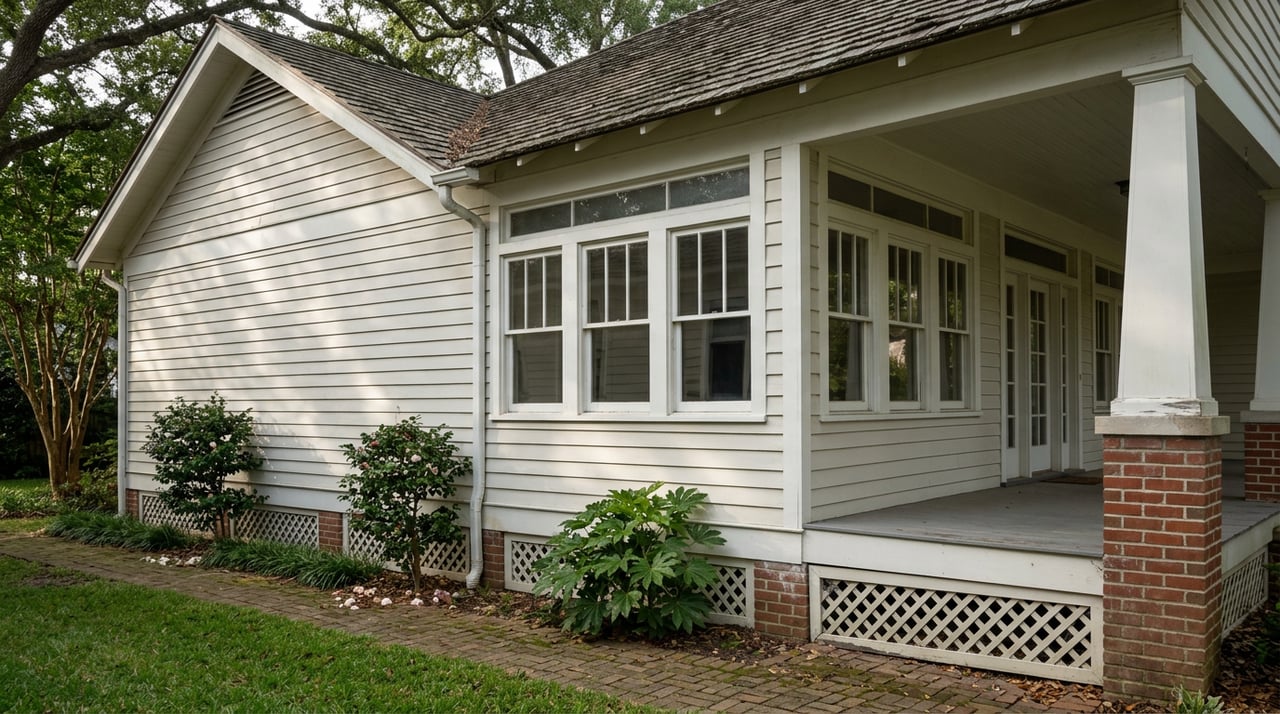
- A remodeled early-20th-century bungalow on a standard 6,600 square foot lot, updated kitchen, single-story, walkable to Heights Boulevard.
- A townhome or narrow-lot new build in the 2,300 to 2,500 square foot range, three stories, small yard, closer to the West 22nd and Yale corridors.
- An older cottage on a full lot where the pricing reflects the dirt rather than the structure, priced with a teardown or heavy-renovation buyer in mind.
Above the median, buyers are competing for something meaningfully different. New construction from named local builders sets the tone at the top of the range. Mazzarino Construction & Development, the 2023 GHBA Custom Builder of the Year, has been delivering four and five bedroom homes north of 4,000 square feet in Sunset Heights and Woodland Heights with completion dates rolling through late 2026 and into 2027. Stoneworks Builders and Nan and Company have listed multiple three-story new builds in the Greater Heights at the same time. The active listings tell a consistent story: high-end finishes, three-story footprints, and no HOA on many streets.
The friction point is not finding these homes. It is winning them. Demand in the Heights is strong enough that buyers are often negotiating up, not down, especially on remodeled bungalows and historic homes. Waiting for prices to fall here has been a losing strategy for years. Come prepared to compete rather than to negotiate a discount.
Why the inner-loop pipeline doesn't rescue buyers before 2028
The reasonable counterargument to Heights scarcity is that Houston's Inner Loop has a wave of luxury supply coming. That is true, and it is also further out than most buyers assume. Houston is poised to start seeing new construction on several mid-to-high-rise complexes across the Inner Loop as luxury developers set their sights on the city. Since late 2025, at least four new projects have been announced on different residences that will offer condos or apartment units with million-dollar price tags.
The four projects worth naming, because they will shape any comparison discussion a buyer has this year:
- The Ritz-Carlton Residences, Houston, at 3100 W. Alabama. A 45-story skyscraper featuring 150 guest rooms and 112 residences available for ownership at the Ritz-Carlton Hotel and Residences.
- KA Residences, near River Oaks. Co-founded by developer Moiz Bhamani and Houston-based interior designer Nina Magon, KA Residences is set to be one of Houston's newest wellness-focused luxury residence brands situated near the River Oaks. The development will offer 28 "ultra private" residents described on the development's website as "sky villas." KA Residences will launch this April, with groundbreaking slated for late 2026. The estimated delivery date is set for the first quarter of 2029. Prices will range from $3.5 million for a two-bedroom sky villa to between $9 million and $15 million for penthouses.
- Ace & Ivy, in River Oaks. Ace & Ivy is designed by the architecture firm Lake Flato. A new 11-story tower is set to launch in River Oaks by 2028 that will offer a unique residence experience based on health and wellness.
- The Langley, in Southampton. The Langley offers just 134 homes, with no more than eight per floor, ensuring an atmosphere of exclusivity. Each two or three-bedroom residence spans 2,165 to 3,407 square feet, featuring 10-foot ceilings, 8-foot solid-wood doors, and wide-plank hardwood oak flooring. The Langley is leasing rather than selling.
Read those delivery windows carefully. Ritz-Carlton, KA, and Ace & Ivy are 2028 and 2029 stories. None of them is a Heights product. All of them draw from a different buyer pool, one that wants a service model and a tower address rather than a hundred-year-old lot east of Yale. The supply that would actually compete with a remodeled Heights bungalow, meaning single-family, walkable, historic, inner-loop, is not being built. There is no site left to build it on at scale.
That is the mechanism underneath the record median. Scarcity is priced in for at least the 2026 and 2027 selling seasons, and the announced pipeline does not change the math for the buyer looking at a 1920s cottage on Cortlandt.
What this changes about a buyer's offer
Three practical adjustments for a Heights buyer this summer.
Underwrite to competition, not to comps. Recent comparable sales in a fast market with ten day turnover trail the true market by 30 to 45 days. Assume the number that closed in April was struck in February conditions. Price your offer against what is listing today, not what closed last quarter.
Treat inspection strategy as pricing strategy. In a market where buyers are often negotiating up, not down, especially on remodeled bungalows and historic homes, the option period is where value is found. Historic Heights homes carry known variables: foundation movement on pier-and-beam, older sewer laterals, and additions built without permits by prior owners. An inspection with a foundation engineer and a scope of the sewer line is the difference between a clean close and a five-figure surprise.
Sellers should resist the temptation to overprice into the tape. The instinct in a record-median market is to add ten percent to the last comp. Price it right at market value or slightly below, then let competition raise it. In a tight, fast-moving market like the Heights, undershooting the list price tends to stir up multiple offers that push the final number up, while overshooting can stall a home that should have sold quickly. Strong prep and effective pricing matter more than an aggressive number. A stale listing in a 10-day market is a signal buyers read immediately.
The read-through for the rest of the Inner Loop
If the Heights is the sharpest example of decoupling, it is not the only one. The same logic applies, in softer form, wherever inner-loop single-family supply is capped by lot geography and historic character: parts of Southampton, Boulevard Oaks, and the older streets of River Oaks proper. The tower pipeline is coming for the condo buyer. The single-family buyer inside the Loop is competing on a fixed board.
A buyer choosing between the Heights, Memorial, and Sugar Land this summer is not choosing between three versions of the same market. They are choosing between three different pricing regimes, and only one of them is running on scarcity.
FAQ
Is the Heights median going to correct when broader Houston catches up? The two markets are running on different inputs. Greater Houston's softening is driven by inventory growth in outer submarkets and new construction volume. Neither factor applies inside the Heights, where lot supply is fixed and new construction is infill rather than tract.
Does the incoming Ritz-Carlton or KA supply pull buyers out of the Heights? Different buyer. The tower product at $3.5 million and up serves lock-and-leave buyers who want concierge service. Heights buyers are typically choosing yard, walkability, and character. The two pools overlap at the margin, not at the core.
How competitive are Heights offers actually running? Ten-day average days on market and the observation that strong properties are drawing offers above list are the numbers to price against. Expect to compete on terms, not just price, particularly option period length and financing contingencies.
What is the single biggest mistake buyers are making in this market? Anchoring to the Greater Houston narrative. The MSA headline is real. It does not apply inside the Loop's historic single-family pockets, and pricing an offer as if it does costs deals.
A market that runs on scarcity rewards preparation and punishes hesitation. If you are weighing a move into the Heights or comparing it against a Memorial or Sugar Land alternative, the analysis is worth doing carefully, once, with someone who reads the neighborhood tape rather than the metro headline. Ferguson Real Estate Consulting advises luxury residential and commercial clients across Greater Houston and Fort Bend County. Get in touch when the timing feels right.